Tripeptide-1 CAS 72957-37-0, also known as GHK (Glycyl-L-histidyl-L-lysine), is a well-studied signal peptide widely used in modern cosmetic formulations. As a naturally occurring fragment derived from collagen breakdown, Tripeptide-1 plays a critical role in skin regeneration, extracellular matrix (ECM) remodeling, and anti-aging skincare solutions.
With increasing demand for high-performance peptide ingredients, Tripeptide-1 has become a key active component in serums, creams, and post-procedure skincare products due to its ability to support collagen production and improve overall skin quality.
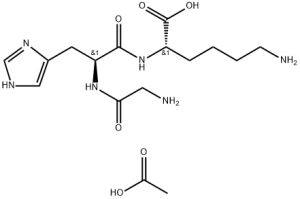
What is Tripeptide-1?
Tripeptide-1 (CAS 72957-37-0), also known as GHK, is a small peptide composed of glycine, histidine, and lysine. Naturally derived from collagen breakdown, Tripeptide-1 acts as a biological signal molecule that can influence skin regeneration processes.
In cosmetic applications, Tripeptide-1 is classified as a signal peptide, meaning it helps stimulate cellular activity related to collagen and extracellular matrix (ECM) production.
How Tripeptide-1 Works in Skin?
Signal Peptide Activity
Tripeptide-1 functions as a biological messenger that stimulates fibroblasts to enhance the synthesis of collagen, elastin, and glycosaminoglycans. This signaling process helps maintain skin structure and resilience.
Copper Binding and GHK-Cu Formation
One of the most important properties of Tripeptide-1 (GHK) is its ability to bind copper ions, forming GHK-Cu (Copper Peptide). This complex enhances enzymatic activity involved in wound healing and tissue remodeling.
Copper-bound Tripeptide-1 has been shown to:
- Support skin repair processes
- Promote angiogenesis
- Improve antioxidant defense mechanisms
Regulation of ECM Remodeling
Tripeptide-1 helps regulate the balance between collagen synthesis and degradation by influencing matrix metalloproteinases (MMPs). This contributes to improved skin texture and reduced visible signs of aging.
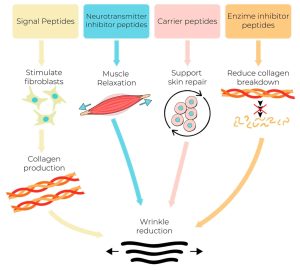 Collagen Signaling Pathway
Key Benefits of Tripeptide-1
Supports Collagen Production
Tripeptide-1 may help stimulate collagen synthesis, which is essential for maintaining skin firmness and structural integrity.
Improves Skin Firmness and Elasticity
By enhancing ECM components, Tripeptide-1 contributes to smoother and more elastic skin, reducing the appearance of fine lines.
Assists Skin Repair and Barrier Function
Tripeptide-1 supports skin recovery processes, making it suitable for formulations targeting sensitive or post-treatment skin.
Tripeptide-1 vs Other Peptides
To better understand the positioning of Tripeptide-1, it is useful to compare it with other commonly used peptides:
Tripeptide-1 vs Palmitoyl Tripeptide-1
Palmitoyl Tripeptide-1 is a modified version with improved lipid solubility, allowing better skin penetration. While Tripeptide-1 focuses on signaling, the palmitoyl derivative enhances delivery efficiency.
Tripeptide-1 vs Copper Peptides (GHK-Cu)
GHK-Cu is the copper-complexed form of Tripeptide-1, offering stronger activity in wound healing and skin repair applications.
Tripeptide-1 vs Biotinoyl Tripeptide-1
Biotinoyl Tripeptide-1 is typically used in hair and lash care products, whereas Tripeptide-1 is more widely applied in skin regeneration formulations.
These peptide variants can be strategically combined to create synergistic effects in advanced cosmetic products.
 Tripeptide-1 Powder
Why Choose High-Quality Tripeptide-1 for Your Formulation?
At Natural Micron Pharm, we offer:
- High-purity Tripeptide-1 (CAS 72957-37-0)
- Reliable global supply chain
- Custom peptide solutions for formulation needs
- Technical support for product development
If you are sourcing Tripeptide-1 or related peptides, contact us today to request:
- COA & specifications
- Sample testing
- Bulk pricing and lead time
👉 Submit your inquiry now to accelerate your product development.
Conclusion
Tripeptide-1 remains one of the most important signal peptides in cosmetic science, offering strong potential for collagen support, skin repair, and anti-aging applications. As peptide-based formulations continue to grow, Tripeptide-1 provides a reliable and versatile solution for product development.
FAQ
Q1. What is Tripeptide-1 used for?
Tripeptide-1 is used in skincare products to support collagen production, improve skin elasticity, and assist in skin repair.
Q2. Is Tripeptide-1 the same as GHK?
Yes, Tripeptide-1 is also known as GHK, a naturally occurring peptide composed of glycine, histidine, and lysine.
Q3. What is the difference between Tripeptide-1 and GHK-Cu?
GHK-Cu is the copper-bound form of Tripeptide-1, offering enhanced activity in skin repair and regeneration.


