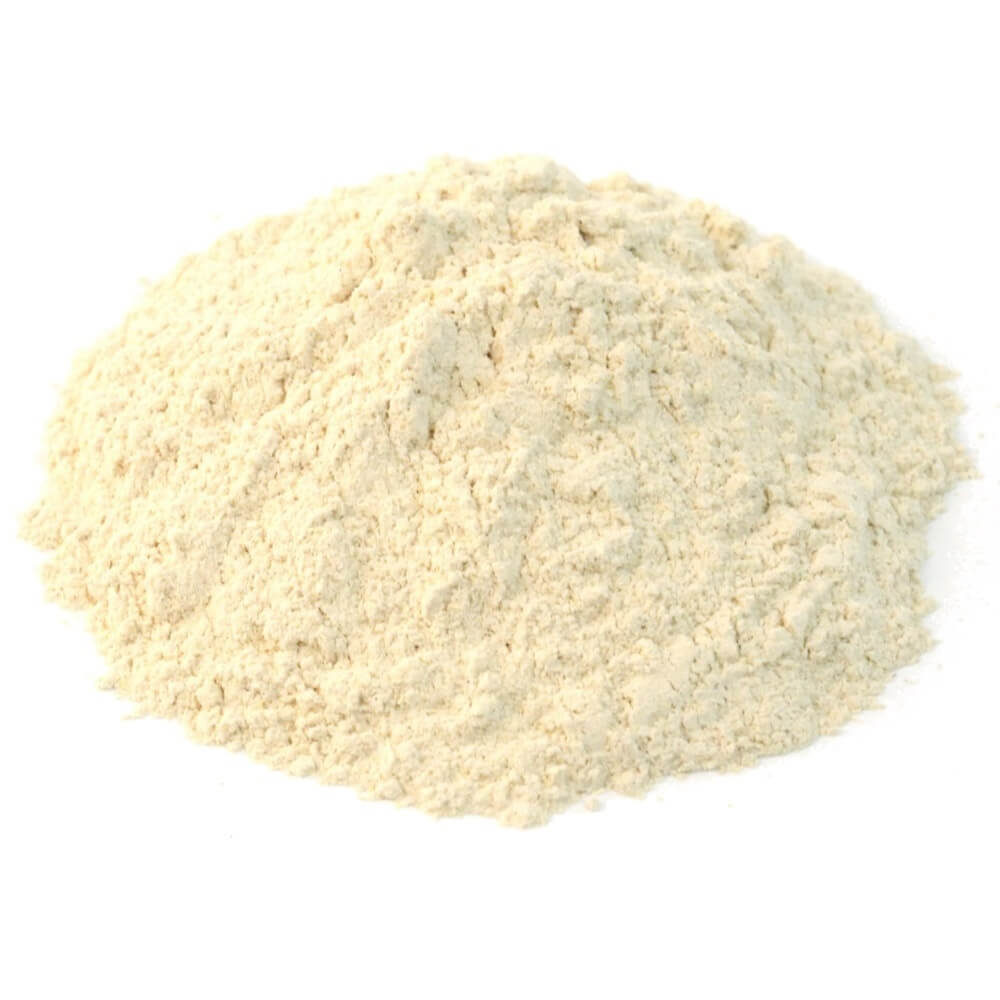
Stigmasterol in Nutrition and Pharmaceutical Applications
Stigmasterol(Cas 83-48-7) is a plant-derived sterol with applications that extend beyond the conventional phytosterol category. It is relevant to nutrition ingredient development, phytosterol research, and pharmaceutical processes involving steroid-related compounds.
What makes stigmasterol particularly interesting from an industrial perspective is its structure. Although it shares the basic sterol framework with compounds such as beta-sitosterol and campesterol, differences in the side chain give stigmasterol its own chemical identity and influence how it behaves in formulation, analysis, and downstream processing.
This combination of nutritional relevance and steroid chemistry explains why interest in stigmasterol spans several areas, from plant sterol research and functional ingredients to pharmaceutical intermediates and steroid-related synthesis.
Stigmasterol is a naturally occurring phytosterol with the characteristic four-ring sterol nucleus. Its molecular structure includes a hydroxyl group and an unsaturated side chain, features that distinguish it from other closely related plant sterols.
 Stigmasterol(Cas 83-48-7)
Stigmasterol Structure and Chemical Characteristics
Stigmasterol has the molecular formula C29H48O and a molecular weight of approximately 412.7 g/mol. Its sterol nucleus is combined with an unsaturated side chain, giving the molecule structural features that are particularly relevant when comparing it with beta-sitosterol and other phytosterols.
The side chain is one of the most useful points of comparison.
Beta-sitosterol and stigmasterol have very similar overall structures, but the presence of an additional double bond in stigmasterol gives the two compounds different chemical identities. This difference can become important when a specific sterol is required for analytical work, formulation development, or downstream chemical or biological transformation.
For this reason, searches for chemical structure of stigmasterol are not simply academic. Structural identity can directly affect how a raw material performs in a technical process.
Stigmasterol vs. Beta-Sitosterol and Campesterol
Stigmasterol is often mentioned together with beta-sitosterol and campesterol because they are all phytosterols commonly encountered in plant-derived materials.
However, being part of the same chemical family does not make them interchangeable.
Stigmasterol
Stigmasterol contains an unsaturated side chain and has a distinct molecular structure. This makes it relevant to both phytosterol research and steroid-related chemical or biological processes.
Beta-Sitosterol
Beta-sitosterol has a closely related sterol framework but a different side-chain structure. It is one of the better-known phytosterols and is frequently discussed alongside stigmasterol in nutritional and analytical contexts.
Campesterol
Campesterol is another structurally related phytosterol with its own side-chain characteristics and analytical profile.
The differences may appear small when looking only at the overall sterol skeleton, but they matter when a process depends on the exact identity of the starting material.
For manufacturers and R&D teams, the practical lesson is straightforward: a phytosterol should be selected according to its actual chemical identity and intended application rather than simply being treated as a generic plant sterol.
Why Stigmasterol Has More Than One Industrial Role
Stigmasterol is commonly discussed as one member of the phytosterol family. That is an appropriate starting point, but it does not fully explain its industrial applications.
The same molecular framework that makes stigmasterol relevant to plant sterol research also makes it interesting in steroid chemistry.
In nutrition, the compound is considered as part of the broader phytosterol profile of plant-derived materials and functional ingredients. In pharmaceutical and biotechnology applications, its sterol structure makes it relevant to processes in which phytosterols are used as starting materials for the production of steroid-related compounds.
These are two different application pathways, and they should not be confused.
A nutrition developer may be primarily concerned with composition, purity, physical properties, formulation behavior, and ingredient specifications. A pharmaceutical or biotechnology developer may be more interested in molecular structure, substrate characteristics, conversion behavior, and the requirements of a downstream synthesis or biotransformation process.
That distinction is important when evaluating stigmasterol as an industrial raw material.
Stigmasterol Solubility and Formulation Behavior
One practical issue that deserves attention when working with stigmasterol is its low water solubility.
Stigmasterol is a lipophilic sterol and does not readily dissolve in water. As a result, a formulation containing stigmasterol may require consideration of dispersion, carrier systems, solvent compatibility, particle characteristics, and processing conditions.
This becomes particularly relevant when developing nutrition ingredients intended for aqueous or emulsion-based systems.
Simply adding a stigmasterol powder to a water-based formulation does not mean that the compound will dissolve uniformly. Depending on the formulation, developers may instead need to consider how the material is dispersed and how its physical characteristics affect the final system.
The same issue can arise in bioprocessing.
When a phytosterol is used as a substrate in a biological transformation process, poor aqueous compatibility can influence mass transfer and substrate availability. Therefore, stigmasterol solubility is not merely a specification-sheet detail. It can become a process consideration.
For this reason, formulation and process development should evaluate stigmasterol according to the actual environment in which the material will be used.
Stigmasterol as a Pharmaceutical Intermediate Raw Material
The pharmaceutical relevance of stigmasterol is closely connected with steroid chemistry.
Phytosterols can serve as starting materials in processes designed to obtain steroid-related intermediates. Their existing sterol framework provides a useful molecular foundation for downstream chemical or biological transformation.
Stigmasterol is therefore relevant to research and industrial processes involving steroid intermediates, although its precise role depends on the particular synthesis or biotransformation route.
This distinction is important.
Stigmasterol itself should not automatically be described as a finished pharmaceutical ingredient. In many development contexts, its value lies in its role as a starting material or substrate that can undergo further transformation.
The suitability of a particular stigmasterol material can therefore depend on factors such as:
- chemical purity;
- molecular identity;
- impurity profile;
- physical characteristics;
- substrate concentration;
- reaction conditions;
- compatibility with the selected process.
A process that works efficiently with one phytosterol cannot necessarily be assumed to perform in the same way with another.
Stigmasterol and Steroid Synthesis
The connection between stigmasterol and steroid synthesis is one of the more technically interesting aspects of the ingredient.
Sterol-based steroid production can involve chemical conversion, microbial transformation, or a combination of upstream and downstream processes. The exact route depends on the target compound and the process technology being used.
In this context, stigmasterol is relevant because its steroid framework already contains much of the structural complexity required for steroid-related transformation.
The side chain, however, remains an important part of the equation.
Different sterols can behave differently during biotransformation, meaning that substrate selection can affect process performance. This is one reason why stigmasterol should be evaluated as an individual raw material rather than simply grouped together with beta-sitosterol or other phytosterols.
For pharmaceutical R&D, this structural perspective is more useful than simply describing stigmasterol as a “plant-derived ingredient.”
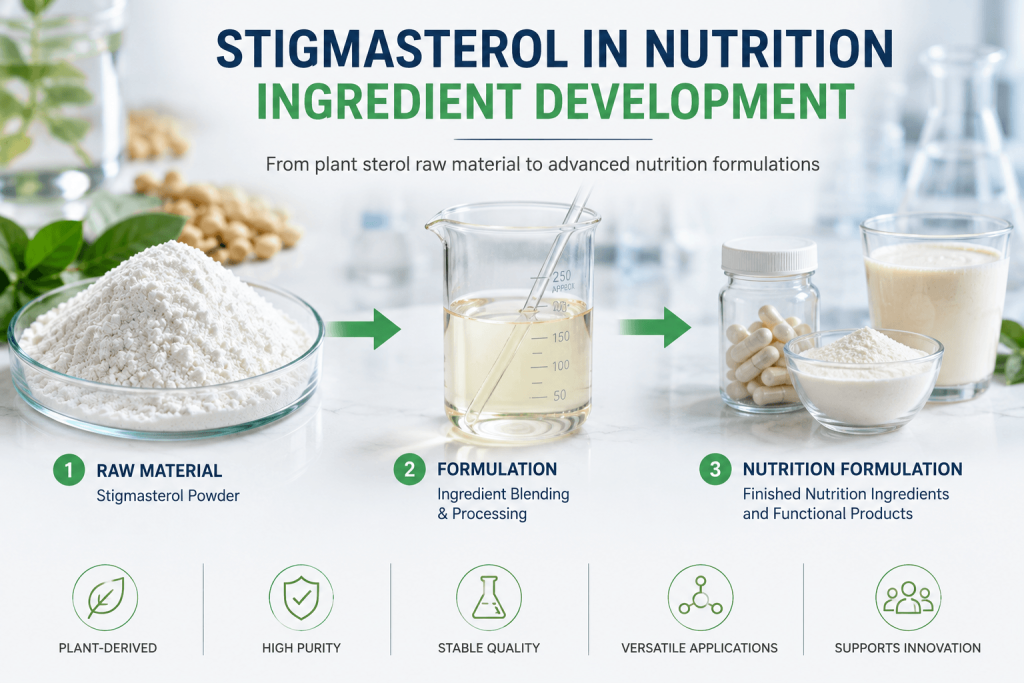 Stigmasterol powder in nutrition ingredient formulation development
From Plant Sterol to Industrial Raw Material
The significance of stigmasterol lies partly in the fact that it connects several areas of ingredient and chemical development.
At one end, it is a naturally occurring phytosterol associated with plant-derived materials and nutrition research.
At the other, its molecular structure makes it relevant to steroid chemistry and pharmaceutical-related processes.
Between these two areas are a number of technical considerations—purity, physical form, solubility, structural identity, processing behavior, and consistency—that determine whether a particular material is appropriate for a given application.
This is a more useful way to look at stigmasterol than treating it simply as another plant-based ingredient.
For companies developing phytosterol-based nutrition products, the compound can be evaluated as a defined ingredient within a broader formulation.
For pharmaceutical and biotechnology developers, the same material may be considered from the perspective of sterol chemistry and downstream transformation.
The application determines the specification.
Stigmasterol CAS 83-48-7 for Global B2B Applications
Natural Micron Pharm supplies Stigmasterol CAS 83-48-7 for global B2B customers working with nutrition ingredients and pharmaceutical-related applications.
Our capabilities include stable supply, bulk production, customization support, technical communication, and export experience. Product specifications can be discussed according to the intended application and downstream requirements.
For customers evaluating stigmasterol powder for formulation development, phytosterol research, or pharmaceutical-related processes, technical documentation such as COA, SDS/MSDS, specifications, and other relevant product information can be provided according to the applicable product requirements.
Whether you are developing a nutrition ingredient or evaluating stigmasterol as a raw material for a downstream process, our team can discuss your technical requirements, sample needs, bulk quantities, packaging, and quotation.
Contact Natural Micron Pharm to discuss Stigmasterol CAS 83-48-7, request a sample, obtain product specifications or technical documentation, or inquire about bulk supply.
FAQ
Q1. What is stigmasterol?
Stigmasterol CAS 83-48-7 is a naturally occurring plant sterol belonging to the phytosterol family. It is relevant to nutrition ingredient development and is also used as a raw material or substrate in certain pharmaceutical and steroid-related processes.
Q2. What is stigmasterol used for?
Stigmasterol can be used in nutrition ingredient development, phytosterol research, and pharmaceutical-related processes involving steroid chemistry and downstream transformation.
Q3. Is stigmasterol soluble in water?
Stigmasterol has very low water solubility. Its limited compatibility with aqueous systems should be considered when developing formulations or processes that require dispersion in water.
Q4. What is the difference between stigmasterol and beta-sitosterol?
Stigmasterol and beta-sitosterol have closely related sterol structures, but their side chains are different. Stigmasterol contains an additional double bond in its side chain, giving it a distinct chemical identity and potentially different behavior in downstream processes.
Q5. Can stigmasterol be used for steroid synthesis?
Stigmasterol can serve as a starting material or substrate in certain steroid-related chemical and biological transformation processes. The appropriate material and process conditions depend on the target compound and synthesis route.