The demand for functional cosmetic ingredients continues to drive interest in peptide-based skincare formulations. Among the ingredients receiving attention from cosmetic formulators and product developers, Palmitoyl Pentapeptide-4(CAS 214047-00-4) has an established position in the development of advanced skincare products focused on skin conditioning, smoothness, firmness, and the appearance of fine lines.
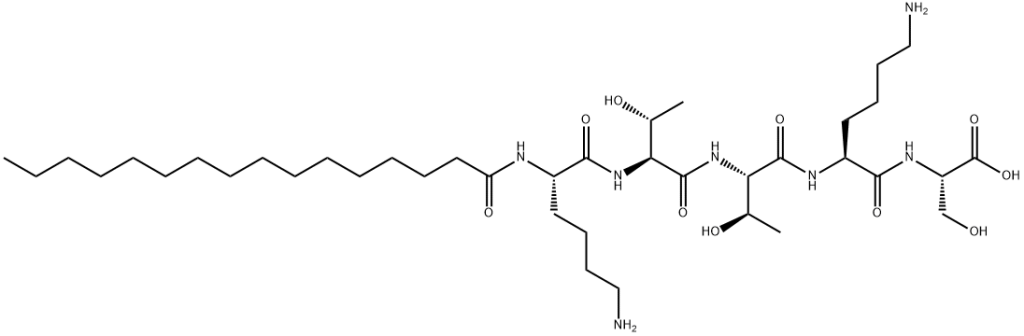
Also known as Pal-KTTKS, Palmitoyl Pentapeptide-4 is a palmitoylated pentapeptide used in cosmetic formulations. Its structure combines a short peptide sequence with a palmitoyl group, giving the ingredient physicochemical characteristics that are relevant to topical cosmetic formulation.
For cosmetic manufacturers, R&D teams, brands, and ingredient distributors, the interest in Palmitoyl Pentapeptide-4 is not limited to its identity. Its application potential, formulation compatibility, technical characteristics, and position within the broader cosmetic peptide market are increasingly relevant when developing new skincare products.
This article examines the role of Palmitoyl Pentapeptide-4 in skincare, its major application areas, formulation considerations, and its broader value for cosmetic ingredient development.
 Palmitoyl Pentapeptide-4 Cas 214047-00-4
What Is Palmitoyl Pentapeptide-4?
Palmitoyl Pentapeptide-4 is a synthetic peptide ingredient consisting of the pentapeptide sequence Lys-Thr-Thr-Lys-Ser, commonly abbreviated as KTTKS, linked to a palmitoyl group.
The ingredient is associated with CAS No. 214047-00-4 and is commonly discussed in cosmetic science under the name Pal-KTTKS.
The peptide structure is important because KTTKS is associated with a fragment of type I procollagen, while palmitoylation changes the physicochemical properties of the peptide. Research into Palmitoyl Pentapeptide-4 has therefore focused on its interaction with biological pathways associated with extracellular matrix components and skin-aging processes.
From a formulation perspective, Palmitoyl Pentapeptide-4 belongs to the wider category of cosmetic peptides, a group of ingredients used in skincare formulations for different functional and product-positioning purposes.
Its role should be distinguished from pharmaceutical treatment. In cosmetic applications, Palmitoyl Pentapeptide-4 is primarily relevant to the development of topical skincare products and appearance-focused formulations.
Key Palmitoyl Pentapeptide-4 Skincare Applications
1. Anti-Aging and Facial Care Formulations
One of the most established application areas for Palmitoyl Pentapeptide-4 is facial skincare designed around visible signs of skin aging.
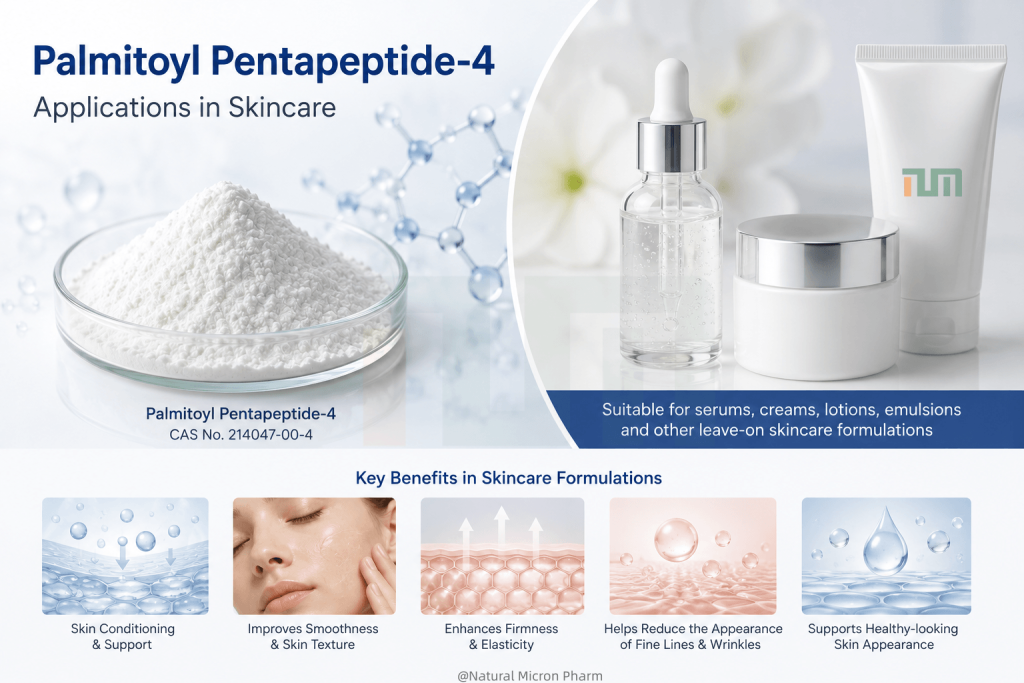
The ingredient can be incorporated into formulation concepts such as facial creams, serums, emulsions, and other leave-on products.
Research on Palmitoyl Pentapeptide-4 has examined its relationship with extracellular matrix-related processes and parameters associated with the appearance of wrinkles and skin texture.
2. Firming and Skin-Conditioning Products
Another important application is the development of skincare products focused on firmness and skin conditioning.
Palmitoyl Pentapeptide-4 is not simply a conventional emollient or humectant. Its value comes from its peptide-based functionality and its positioning within the broader cosmetic peptide category.
For brands and manufacturers developing differentiated skincare products, peptide ingredients can also contribute to a more technically oriented product concept.
3. Fine-Line and Skin-Texture Products
Fine lines, wrinkles, and changes in skin texture remain important areas of development within the global skincare market.
Published research has investigated Palmitoyl Pentapeptide-4 in topical cosmetic formulations, including studies examining parameters related to wrinkles, skin roughness, elasticity, hydration, and other appearance-related characteristics.
These findings help explain the continuing interest in Palmitoyl Pentapeptide-4 as a cosmetic ingredient.
However, formulators should distinguish between ingredient research and finished-product claims. The appropriate claims for a commercial cosmetic product depend on the formulation, testing, target market, and applicable regulatory requirements.
 Palmitoyl Pentapeptide-4 in Skincare
Palmitoyl Pentapeptide-4 Compared with Other Cosmetic Peptides
Palmitoyl Pentapeptide-4 is part of a much larger cosmetic peptide landscape.
Other commonly discussed peptide ingredients include Palmitoyl Tripeptide-1, Copper Tripeptide-1, Acetyl Hexapeptide-8, and other signal, carrier, or peptide-based cosmetic ingredients.
These materials should not be considered interchangeable.
Their molecular structures, formulation characteristics, mechanisms of interest, and cosmetic positioning can differ.
For product developers, the more useful question is not necessarily which peptide is “best,” but which ingredient is appropriate for the intended formulation concept.
For example, a formulation developed around a signal peptide concept may have different ingredient requirements from a product built around copper-containing peptides or other peptide technologies.
This diversity is one reason why cosmetic peptides continue to attract attention from skincare formulators and ingredient developers.
The Industrial Value of Palmitoyl Pentapeptide-4
The value of Palmitoyl Pentapeptide-4 extends beyond its use in individual skincare products.
For the cosmetic ingredient industry, defined peptide structures can support the development of more specialized formulations and differentiated product concepts.
Several characteristics contribute to its industrial relevance.
1. Defined Molecular Structure
Palmitoyl Pentapeptide-4 has a clearly defined peptide sequence and chemical structure, which allows formulation teams to evaluate it as a specific cosmetic ingredient rather than as a broadly defined botanical or mixture.
2. Compatibility with Premium Skincare Concepts
Peptide ingredients are frequently associated with advanced facial care and premium skincare development.
Palmitoyl Pentapeptide-4 can therefore be incorporated into product concepts where technical ingredient differentiation is an important part of formulation development.
3. Application Flexibility
Its potential use in creams, serums, emulsions, and other topical skincare systems gives formulators flexibility when developing different product formats.
The actual use level and formulation conditions should be established according to the raw material specification and finished-product requirements.
Key Considerations for Formulators
When incorporating Palmitoyl Pentapeptide-4 into a new formulation, technical teams should consider the ingredient within the complete product-development process.
Important areas include:
- Ingredient identity – Confirm the chemical identity, CAS number, nomenclature, and applicable specification.
- Formulation compatibility – Evaluate compatibility with the formulation’s pH, solvents, emulsifiers, preservatives, and other active ingredients.
- Processing conditions – Assess the impact of temperature, mixing, and production procedures.
- Stability – Conduct stability testing under conditions representative of the intended product and packaging.
- Finished-product claims – Ensure cosmetic claims are supported by appropriate evidence and comply with the requirements of the target market.
- Technical documentation – Maintain appropriate raw material specifications, analytical information, SDS/MSDS, COA, and other documentation required for product development and quality control.
These considerations are particularly important for manufacturers developing formulations for multiple international markets, where technical and regulatory requirements may vary.
Palmitoyl Pentapeptide-4 in the Future of Skincare Formulation
The continued development of cosmetic peptides reflects a wider shift toward more technically differentiated skincare ingredients.
Consumers increasingly encounter peptide-based product concepts, while formulators are simultaneously looking for ingredients that can support more specialized product positioning.
For ingredient manufacturers and B2B customers, this creates opportunities to develop formulations that combine peptides with complementary ingredient technologies.
Palmitoyl Pentapeptide-4 can therefore be viewed as part of a broader formulation trend rather than as an isolated ingredient.
Its relevance is particularly strong in areas such as advanced facial care, firming concepts, skin-conditioning formulations, and peptide-focused skincare development.
As cosmetic brands continue to develop more specialized formulations, ingredient suppliers with stable production capabilities, technical support, customization options, and international export experience can play an important role in supporting formulation development and commercialization.
Conclusion
Palmitoyl Pentapeptide-4 remains a relevant ingredient for the development of peptide-based skincare formulations.
Its defined peptide structure, palmitoylated design, research background, and established cosmetic applications make it particularly relevant to facial care products focused on skin conditioning, smoothness, firmness, and the appearance of fine lines.
For cosmetic manufacturers, brands, R&D teams, and ingredient distributors, understanding both the application potential and formulation considerations of Palmitoyl Pentapeptide-4 can support more informed product development.
Natural Micron Pharm supplies cosmetic ingredients for global B2B customers and supports formulation projects with stable supply, bulk production capabilities, customization options, technical support, and export experience.
If you are evaluating Palmitoyl Pentapeptide-4 for a cosmetic formulation, contact our team for product specifications, COA, SDS/MSDS, samples, quotations, or additional technical information.
Learn more: Palmitoyl Pentapeptide-4 Product Page
FAQ
Q1. What is Palmitoyl Pentapeptide-4?
Palmitoyl Pentapeptide-4 is a cosmetic peptide ingredient composed of a palmitoyl group linked to the peptide sequence KTTKS. It is widely studied and used in skincare formulations focused on skin appearance, including anti-aging, firming, and skin-conditioning products.
Q2. What is Palmitoyl Pentapeptide-4 used for in skincare?
Palmitoyl Pentapeptide-4 is commonly incorporated into facial care, anti-aging, firming, and skin-conditioning formulations. It is particularly relevant to product concepts targeting the appearance of fine lines, skin texture, and overall skin condition.
Q3. Is Palmitoyl Pentapeptide-4 suitable for cosmetic formulations?
Yes. Palmitoyl Pentapeptide-4 is specifically used as a cosmetic peptide ingredient and can be incorporated into different types of skincare formulations. Formulators should evaluate factors such as pH, processing temperature, compatibility with other ingredients, and overall formulation stability.
Q4. Can Palmitoyl Pentapeptide-4 be used in different types of skincare products?
Yes. Its application can extend across facial creams, serums, lotions, emulsions, and other cosmetic products where peptide-based skin-conditioning or appearance-focused concepts are relevant. Final suitability depends on the formulation system and stability evaluation.